
Commercial & B2B Collections Nevada
Unpaid business invoices in Nevada? Start with a review of the balance, documents, disputes and available collection options.
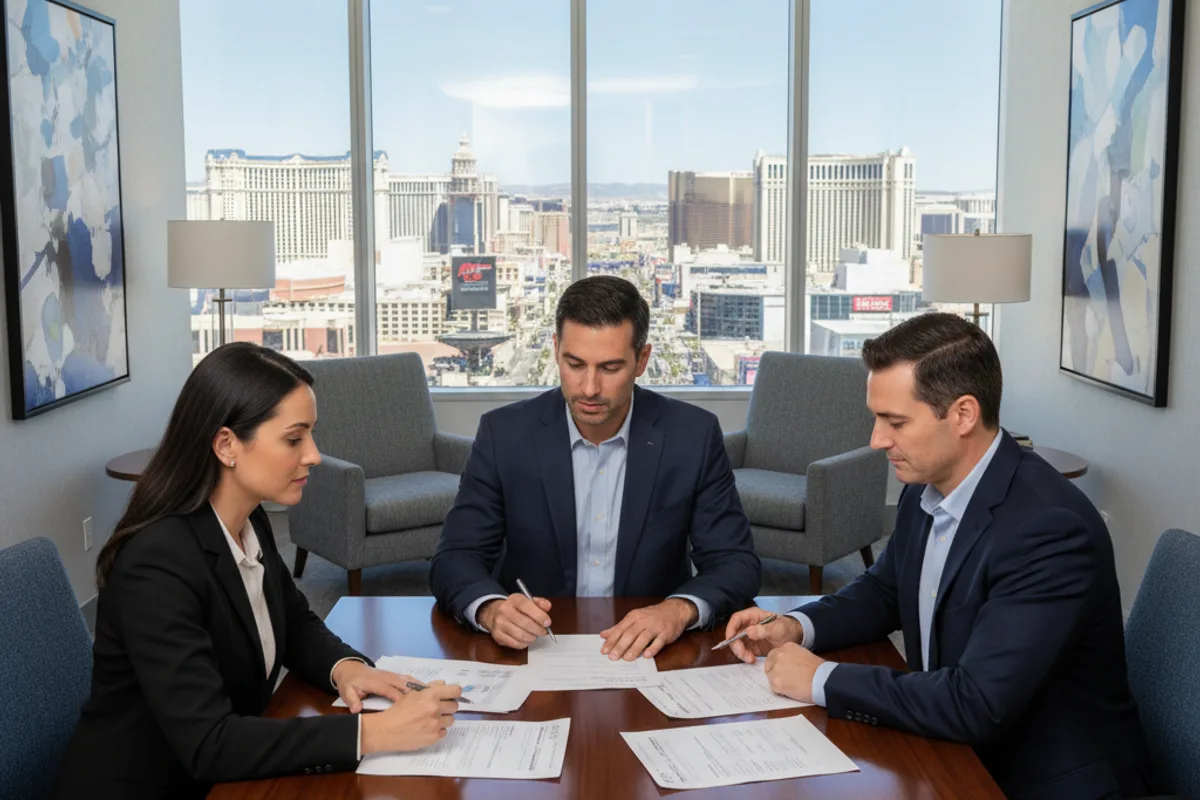
Vegas Valley Collection Service helps businesses pursue unpaid commercial invoices in Nevada. Start with the current balance, agreement and collection history. We review whether the account fits our service, what documents are missing, and the fee and expense terms before placement. Request a free collection review.
Business-purpose debt is generally outside the federal FDCPA definition of consumer debt; the purpose of the transaction matters, not simply whether an individual signed a guarantee. Nevada licensing and other applicable laws still matter. See the CFPB explanation of covered debt.
Which Accounts Fit?
This service is for creditors owed money for business goods or services: trade invoices, professional-service fees, staffing invoices, delivered goods and other documented B2B balances. A single account or a portfolio can be reviewed; acceptance and pricing depend on the facts. If you already have a court judgment, use our judgment recovery service.
Tell us about any dispute, bankruptcy, existing agency agreement, prior settlement or approaching court/lien deadline. Collection placement does not extend a legal deadline. Consumers seeking to pay or challenge an account should use Dispute & Verification.
Documentation-First B2B Recovery
Commercial recovery starts with documentation: signed agreements, purchase orders, invoices, statements of account, delivery confirmations, and signed personal guarantees where applicable. We assess what you have at placement and tell you what gaps to fill before outreach. The records help distinguish an unpaid balance from a billing error, performance dispute or incorrect party; they do not guarantee payment.
- Contract, purchase order or signed service agreement and any guarantee.
- Invoices and a current balance after payments, credits and adjustments.
- Delivery receipts, acceptance records, approved timesheets or completion evidence.
- Debtor business name, contact details, collection history and the details of any dispute.
Use the enquiry form for a summary. Do not put bank details, identity documents or sensitive debtor records in the message; ask for a secure document-transfer route.
Three Questions to Resolve Before Placement
- Who actually owes the balance? Match the legal business name on the agreement to the invoices. Identify any guaranty separately; an owner is not automatically personally liable for a company bill.
- What is unpaid today? Reconcile payments, credits, returned goods and disputed items. Separate principal from any interest or fees you want reviewed.
- What outcome can you authorize? Identify who can approve a settlement or payment plan, any customer-relationship concerns, and any existing placement or assignment.
Industries We Serve in Commercial
- Construction & subcontractors — Contract balances, change-order and retention disputes, with separate review of any lien or filing deadline.
- Business suppliers — Unpaid invoices for goods supplied to another business; any sensitive records require an agreed handling process.
- Professional services — Unpaid retainers, hourly billing disputes, milestone-based contracts. Our tone matches industry professionalism.
- Tech & SaaS — Service-based billing, software usage contracts, scope creep, and platform usage disputes.
- Manufacturing, distribution & wholesale — Delivered-and-unpaid inventory, returns disputes, freight and logistics receivables.
- Staffing and recruiting — Unpaid client invoices supported by service agreements, timesheets and placement records. See our staffing invoice guide.
Specialized Industry Practices
Use the relevant service guide to prepare the records and questions for your industry:
- Manufacturing & Industrial Collections — unpaid POs, delivered-and-unpaid goods, retainage, and materialman's lien claims (NRS 104, NRS 108).
- Mining & Natural Resources Collections — vendors owed by gold, lithium, geothermal, and aggregate operators, with review of potential NRS 108 mine-lien rights.
- Freight & Trucking Collections — carriers, brokers, and logistics providers owed on shipped freight across the I-15 / I-80 corridors.
- B2B Service-Business Collections — staffing, facilities, A&E, IT, and professional-services receivables, reviewed against the agreement, performance records, disputes and applicable deadlines.
Our B2B Process
- Documentation review. We assess account documentation: contracts, invoices, statements, communication history, and personal guarantees.
- First contact. Professional written and phone outreach to debtor principal or appropriate financial contact. Validation notices and detailed payment summaries.
- Negotiation. When debtor is willing but constrained, we structure payment plans. When dispute is the issue, we address it. When obstruction is the pattern, we escalate.
- Legal collection support. If initial attempts fail, we coordinate with experienced Nevada attorneys for litigation and judgment enforcement. Legal work, authorization and separate expenses must be agreed before action.
Collection Fees and Separate Expenses
Standard collection fees are contingency-based. Approved court, filing, service and attorney expenses may be advanced or billed under the agreement, even if recovery is unsuccessful. Confirm the fee rate and expense responsibility in writing before proceeding. Recovery is not guaranteed. See pricing and contingency terms. Standard placements have no setup fees or monthly minimums; the signed engagement defines the actual scope.
Know What to Ask for in an Account Update
An update should help you understand the balance, the work completed and the next decision. Agree the reporting format, frequency and remittance terms before placing an account.
View a blank account-reporting example
Blank planning template. This is not a client report, case study, recovery result or preview of our client portal.
- Report date and account reference
- Use an internal account reference; keep sensitive identity and financial details in the agreed secure system.Entry: ____________________
- Current outstanding balance
- Show the balance as of the report date, with payments and credits reconciled.Entry: ____________________
- Invoice and dispute status
- Record which invoice is unpaid, the reason given for non-payment, and the supporting document still needed.Entry: ____________________
- Latest completed action
- Record what actually happened, when it happened and its outcome; separate it from a planned action.Entry: ____________________
- Next step and approval needed
- Identify the proposed action, responsible contact, review date and any settlement or expense approval.Entry: ____________________
- Money received and remittance
- Separate funds received, collection fees, approved expenses and money remitted to the client.Entry: ____________________
Download the blank account-update template (.txt). Complete it in your own secure records; do not submit sensitive debtor documents through the enquiry form.
Discuss the Customer Relationship Before Outreach
Our approach emphasizes professional communication and resolution of documented disputes. Tell us which customer relationships you want to preserve and who can approve a payment arrangement or settlement. We cannot promise a recovery or the outcome of a future customer relationship.
Frequently Asked Questions
Commercial collection concerns business-purpose obligations. The FDCPA generally covers personal, family or household debt; a sole proprietor or guarantor is not automatically protected simply because they are an individual. Other applicable laws still apply.
Review placement when normal follow-up stalls, promises are missed or a deadline is approaching. A 60–90-day checkpoint is a practical review choice, not a guaranteed recovery threshold. Investigate genuine disputes and confirm the legal deadline first.
Where legal action is appropriate, scope, representation and costs must be agreed separately with authorized counsel. Court and attorney expenses may be advanced or billed even without recovery. An agency placement does not extend a legal deadline.
We use professional communication and review the documented dispute, payment history and your settlement instructions. Discuss relationship concerns before placement; neither recovery nor a continuing customer relationship can be guaranteed.
Construction receivables can be reviewed with the agreement, invoices, change orders, completion records and any notices. Lien and filing deadlines require separate legal review; collection placement does not preserve a lien or extend a deadline.
Get a Free Collection Review
Tell us about your unpaid accounts. We will follow up to discuss whether our services fit and what information we need to review them.