
How to Collect a Commercial Debt in Nevada
A step-by-step playbook for Nevada businesses — demand, liens, guarantees, judgments, and enforcement, with the NRS that make each step work.
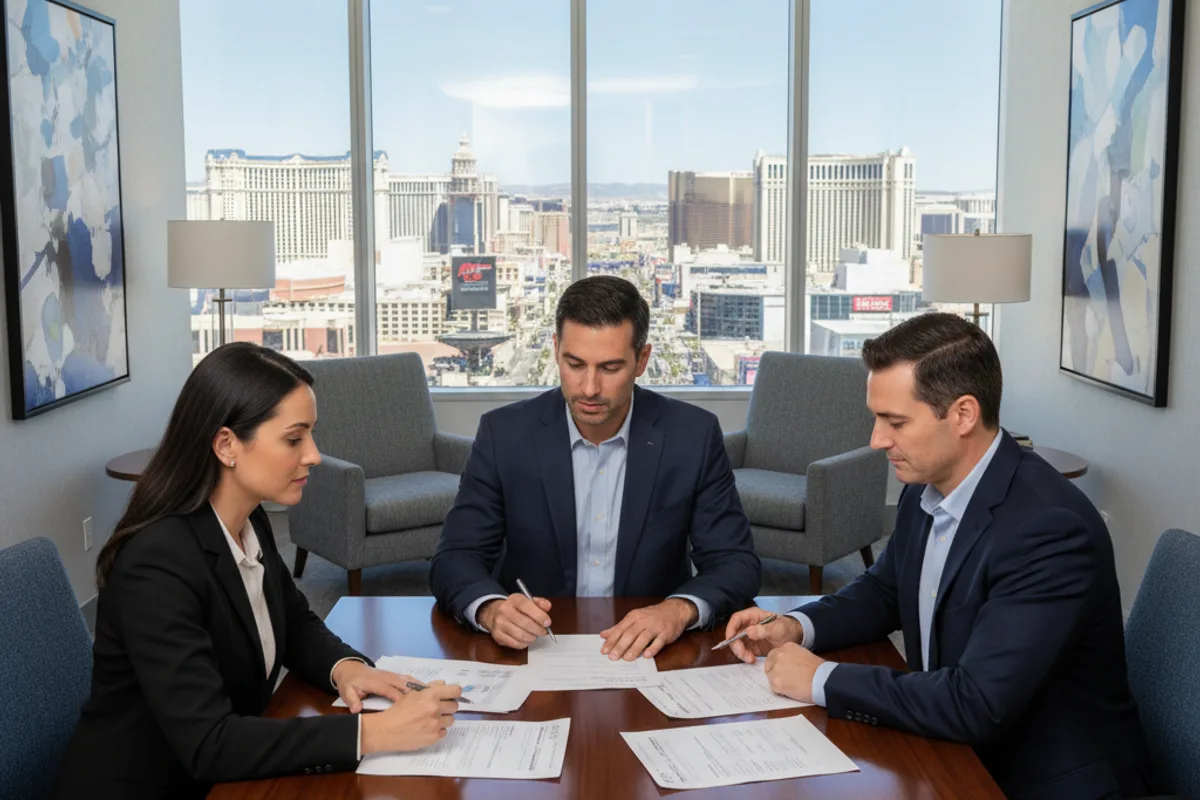
Collecting a commercial debt in Nevada follows a clear escalation path: a documented demand, then the leverage that fits the account — an NRS 104 action for the price of goods, an NRS 108 mechanic's lien, a personal guarantee, or a lawsuit — and finally enforcement of the judgment under NRS 17, 21, and 31. This playbook walks a Nevada business through each step, when to use it, and the deadlines that make or break recovery. It is general information for creditors, not legal advice — for a specific account, consult counsel.
First, Understand What Kind of Debt You Have
Commercial (business-to-business) debt is not consumer debt, and that changes everything about how it's collected. It's usually contractual, higher in value, and — critically — generally not covered by the federal FDCPA that governs consumer collection (though sole proprietors and personal guarantors may retain some consumer protections). That means more direct communication and escalation options are available. But it also means recovery turns on documentation, not soft-touch scripts: your signed agreement, purchase orders, invoices, statements of account, delivery confirmations, and any personal guarantee.
Before anything else, pull that file together. The strength of your documentation determines which tools below are available and how fast the account resolves.
Step 1 — The Documented Demand
Most commercial accounts that resolve, resolve here. A clear, professional written demand — stating the amount, the underlying obligation, and a firm deadline — signals that the matter has moved from routine AR follow-up to formal collection. For a business debtor who has simply been prioritizing other bills, that shift is often enough. The demand should be firm but professional: in commercial collections you are frequently dealing with a customer you may want to keep, and Nevada's business community is smaller than it looks.
When in-house demands have stalled, placing the account with a Nevada-licensed agency escalates the seriousness without burning the relationship — a neutral third party pressing for payment while you stay focused on running the business.
Step 2 — Match the Leverage to the Account
This is where Nevada-specific knowledge separates real recovery from generic dunning. Different accounts unlock different statutory leverage:
Goods sold and delivered — NRS 104 (Nevada's UCC)
If you sold and delivered goods that weren't paid for, Nevada's Uniform Commercial Code (codified in NRS 104) gives you an action for the price of goods accepted by the buyer. Acceptance, delivery records, and invoices are the backbone of the claim. For manufacturers, distributors, and wholesalers with delivered-and-unpaid inventory, this is often the cleanest path to a judgment.
Construction and suppliers — NRS 108 mechanic's & materialman's liens
If you provided labor, materials, or equipment to a Nevada construction project and weren't paid, NRS 108 gives you a mechanic's or materialman's lien against the improved property — a powerful tool, because it attaches to real estate the owner can't easily sell or refinance around. But the lien rights are governed by strict deadlines: certain parties must serve a preliminary notice early in the project, and the notice of lien generally must be recorded within 90 days of completing your work (or of project completion). Miss the deadline and the lien is gone. That's why construction and supplier accounts must be evaluated for lien rights immediately, not after months of unpaid follow-up.
Freight and trucking — the federal 18-month window
Carriers, brokers, and shippers work against a federal clock: 49 U.S.C. § 14705 gives motor carriers an 18-month window to bring an action to recover charges for transportation. On the Nevada I-15 and I-80 corridors, freight receivables age fast and that window closes quietly — so freight accounts need prompt action.
Personal guarantees
If the corporate account is backed by a personal guarantee, the individual guarantor is on the hook when the business won't or can't pay. A signed guarantee dramatically improves recovery odds and should be pursued alongside the corporate claim.
Step 3 — Suit and Judgment
When voluntary resolution stalls and the balance and documentation justify it, the next step is a lawsuit to reduce the debt to a Nevada judgment. Remember the limitations clock: under NRS 11.190 you generally have 6 years on a written contract and 4 years on an oral contract or open account — so a lawsuit has to be filed inside that window (see our Nevada statute of limitations guide). A licensed agency coordinates with experienced Nevada attorneys for this step, typically on contingency, with flat-rate options for legal action where appropriate.
Step 4 — Enforce the Judgment (This Is Where the Money Is)
A judgment is not payment — it's a license to collect. Nevada gives a judgment creditor a full enforcement toolkit:
- Writ of execution to seize non-exempt property (NRS 21).
- Bank levies against the debtor's accounts (NRS 31).
- Wage/receivables garnishment where applicable.
- Judgment-debtor examination under NRS 21.270 — compelling the debtor to appear and disclose assets under oath, which often surfaces bank accounts and receivables you didn't know existed.
And because a Nevada judgment lasts 6 years and is renewable under NRS 17.214, you can keep it alive and enforce it later if a struggling business recovers. This is the heart of our Nevada judgment recovery practice: asset location plus persistent, lawful post-judgment enforcement.
When to Use an Agency vs. an Attorney
The two aren't mutually exclusive — the best programs use both, in sequence. A collection agency is the efficient, cost-effective front line: professional demand, negotiation, skip-tracing, payment-plan structuring, and lien-deadline triage, usually on a no-recovery, no-fee contingency basis. When an account genuinely needs litigation, the agency coordinates with an attorney for suit, judgment, and enforcement — so you're not paying hourly legal rates to chase accounts that resolve with a firm demand. For most Nevada businesses, starting with a licensed agency and escalating to counsel only when warranted recovers the most money at the lowest cost.
Do It Right the First Time
Two mistakes cost Nevada businesses the most: waiting too long, and using the wrong tool. Waiting lets accounts drift past the 90-day mark where recovery rates fall, past NRS 108 lien deadlines, and toward the NRS 11.190 limitations wall. Using the wrong tool — a generic dunning approach on an account that actually had lien rights or a personal guarantee — leaves real leverage on the table.
Vegas Valley Collection Service is a Nevada FID–licensed agency (NMLS 2364012) built for exactly this. We triage every commercial placement for its Nevada statutory leverage — NRS 104 goods claims, NRS 108 lien deadlines, guarantees, and judgment enforcement under NRS 17, 21, and 31 — and pursue the fastest lawful path to recovery, on a no-recovery, no-fee basis. Explore our commercial & B2B collections, manufacturing, freight & trucking, and mining pages for industry-specific detail.
Documentation Checklist Before You Place an Account
Strong documentation is the single biggest predictor of how fast — and whether — a commercial account resolves. Before placing an account or filing suit, gather what you can of the following. Gaps aren't necessarily fatal, but knowing them upfront lets an agency or attorney pick the right path from the start.
- The signed agreement or contract — the foundation for a written-contract claim and the 6-year limitations period under NRS 11.190.
- Purchase orders and invoices — the amount, terms, and what was ordered.
- Proof of delivery or completion — signed delivery receipts, bills of lading, or sign-offs that establish the goods/services were accepted (essential for an NRS 104 goods claim).
- Statements of account — showing the running balance and the last payment or activity date (which sets your true limitations deadline).
- Personal guarantees — any signed guarantee makes an individual liable when the business won't pay.
- Preliminary and lien notices — for construction/supplier accounts, any NRS 108 notices already served, and the key project dates that drive the 90-day lien deadline.
- Communication history — emails or letters where the debtor acknowledged the debt or promised to pay (which can also re-start the clock in your favor).
If you're missing pieces, place the account anyway and tell us — part of our job is telling you exactly which gaps to fill before outreach, and which tools remain available with the documentation you have.
Frequently Asked Questions
How long do I have to collect a commercial debt in Nevada?
It depends on how the debt was created — under NRS 11.190, a written contract runs 6 years and an oral contract or open account runs 4 years. But recovery rates fall sharply after 90 days past due regardless of the statute, so the practical deadline for effective collection is far shorter than the legal one.
When should I use a mechanic's lien in Nevada?
If you supplied labor or materials to a Nevada construction project and weren't paid, NRS 108 gives you a lien against the property — but only if you meet strict deadlines, including recording the notice of lien generally within 90 days of completing your work (and, for some parties, serving a preliminary notice earlier). Missing a deadline forfeits the lien, so evaluate construction and supplier accounts for lien rights immediately.
Does the FDCPA apply to commercial (B2B) debt?
Generally no — the FDCPA governs consumer debt, so most business-to-business collection isn't covered, which broadens the communication and escalation options. But sole proprietors and personal guarantors may retain consumer protections, so a documentation-first, professional approach is still essential.
How do I enforce a judgment against a Nevada business?
With a writ of execution, wage garnishment, and bank levies under NRS 21 and NRS 31, plus a judgment-debtor examination under NRS 21.270 to compel the debtor to disclose assets under oath. A Nevada judgment lasts 6 years and is renewable under NRS 17.214, so it stays enforceable even if the business's ability to pay improves later.
Ready to Recover a Nevada Business Debt?
Send us the account and we'll tell you the fastest lawful path — demand, lien, guarantee, or suit — and what it's worth. We respond during business hours, typically within 2 business hours.